Close your eyes during a film scene and you will notice how much of the story lives in sound: footsteps on a wet road, a door creaking in an empty house, the low hum of a city at night, a sudden silence before a twist. Someone designed each of those sounds. Sound designers shape how films, web series, advertisements, games, podcasts and YouTube videos feel, often without the audience ever noticing their work. This guide explains how to become a sound designer in India, what the job involves, the skills and software to learn, how to build a portfolio and where sound designers find work.
What does a sound designer do?
A sound designer creates, records, edits and arranges the sounds that support a story or experience. The exact tasks change from project to project, but they often include:
- Reading the script or brief and planning the sound style of each scene
- Recording or sourcing sound effects, ambiences and textures
- Creating new sounds by layering and processing recordings
- Cleaning dialogue and removing unwanted noise
- Placing sounds in sync with picture, frame by frame
- Working with the director, editor and composer on the overall mood
- Preparing tracks for the final mix and delivery
Sound designer vs related audio roles
Sound work in media is a team effort, and the job titles overlap. Knowing the main roles helps you choose a starting point.
Sound recordist
A sound recordist, also called a location or production sound mixer, captures dialogue and sound on set using boom microphones and lapel mics.
Dialogue editor
A dialogue editor cleans and smooths recorded dialogue so it sounds consistent across shots, and prepares lines that need re-recording in a dubbing studio.
Foley artist
A Foley artist performs everyday sounds in a studio in sync with the picture, such as footsteps, clothing rustle, cups being placed on a table or a bag being opened.
Re-recording mixer
A re-recording mixer balances dialogue, music and effects into the final soundtrack for cinema, television or streaming.
In smaller teams, especially on web content, advertisements and independent films, one sound designer may handle several of these jobs.
Skills you need to become a sound designer
- Critical listening: noticing small details such as background hum, clicks, room echo and changes in tone.
- Storytelling sense: choosing sounds that support emotion and meaning, not just filling silence.
- Technical knowledge: understanding microphones, sample rates, levels, equalisation, compression and reverb.
- Editing precision: syncing sounds accurately to picture and keeping sessions well organised.
- Recording in the field: capturing clean ambiences and effects outdoors and indoors.
- Collaboration: taking notes from directors and editors and turning them into changes quickly.
- Patience: a short scene can involve dozens of carefully placed layers.
Software and equipment to learn
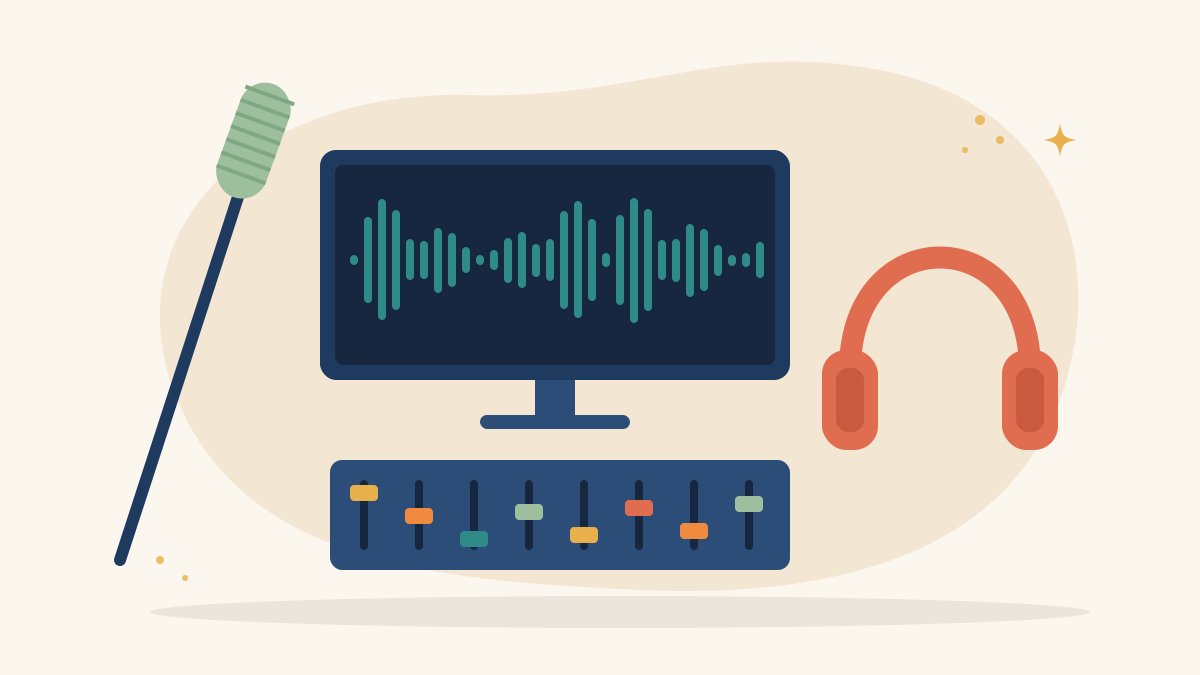
You do not need an expensive studio to start. Begin with one digital audio workstation, often called a DAW, and a pair of good headphones.
- Audio software: Audacity and Reaper are common starting points; Avid Pro Tools is widely used in post-production studios; Adobe Audition and the Fairlight page in DaVinci Resolve are also popular.
- Headphones: closed-back studio headphones help you hear detail accurately.
- Recorder and microphone: a handheld field recorder or a decent microphone lets you build your own sound library.
- Sound libraries: licensed effects libraries are useful, but recording your own sounds builds skill and a unique style.
Step-by-step: how to become a sound designer in India
- Train your ears. Watch films and videos with headphones and list every sound you hear in a scene. Notice what is real, what is added and what is left silent.
- Learn the basics of audio. Understand how microphones work, how to set recording levels and how to avoid noise and distortion.
- Get structured training. Many sound designers study through a diploma, degree or practical media training program covering audio, editing and post-production. Look for hands-on projects and mentor feedback.
- Pick one DAW and learn it well. Practise cutting, layering, fading and syncing sound to video clips.
- Redesign existing clips. Take a short film trailer or game clip, remove the audio and rebuild the soundtrack from scratch. This is one of the best portfolio exercises.
- Work on real projects. Offer sound for student films, short documentaries, NGO videos, podcasts and local business advertisements to get real deadlines and feedback.
- Apply for entry-level roles. Look for titles such as assistant sound editor, studio assistant, dubbing assistant, audio editor or junior sound designer.
How to build a sound design portfolio
- Create a short reel of two to three minutes with your strongest work at the start
- Include before-and-after examples that show how your sound changed a scene
- Show variety, such as a dialogue-heavy scene, an action sequence and an atmospheric piece
- Clearly state what you did on each project if you worked in a team
- Use only material you have permission to share, and credit the original creators
- Host the reel on YouTube or Vimeo and add a simple link to your resume
Where do sound designers work in India?
Sound designers in India work with film and web series production houses, post-production and dubbing studios, advertising agencies, game studios, radio and podcast companies, e-learning firms and YouTube channels. Mumbai has a large share of film and dubbing work, while Chennai, Hyderabad, Bengaluru, Kolkata and Delhi NCR also have active studios. Project-based work is common, especially for podcasts, explainer videos, advertisements and independent films, so many sound designers build a mix of studio jobs and remote projects.
Tips for project-based work
Agree on the scope, number of revision rounds and delivery format in writing before you start. Keep backups of every session, label files clearly and always deliver on time; reliability brings repeat clients.
Common mistakes beginners make
- Adding too many sounds and cluttering a scene
- Ignoring dialogue clarity, which matters more than any effect
- Using unlicensed music or effects in portfolio work
- Mixing only on laptop speakers without checking on headphones and phones
- Learning plugins before learning to listen
Build media skills with Karuna Media
At Karuna Media, run by Puppets Picture Education Trust (PPET) in Noida, the 12-month Karuna Media Master Program trains underprivileged women in media, filmmaking and AI skills, with support for job placement. Students work on practical projects that build the audio, editing and storytelling foundations a sound career needs.
Explore the Karuna Media Master Program or apply now to start your journey. If you want to help more women build creative careers, you can donate to support their training.
The Giving Movement by Karuna Media · #TheGivingMovement
Wear the cause: tees, a tote and a mug that fund media training for women
Tee (Black) ₹699 · Tee (White) ₹649 · Tote ₹449 · Mug ₹399. Printed on demand and shipped across India. 100% of the profit funds media training for underprivileged women.
Buy now on Razorpay Prefer to donate? Go to our donate pageMerch is a purchase, not a donation, and is not eligible for 80G. To make a donation, use our donate page.