
Video is everywhere: Reels, YouTube channels, ads, weddings, news, online classes and OTT shows. All of it needs editors. The good news is that video editing is one of the creative careers where what you can show matters far more than the degree you hold. Many working editors in India learnt through practice, short courses and on-the-job training.
This guide explains how to become a video editor without a degree, from the skills and software to learn, to building a portfolio and finding your first paid work. It also explains how women from low-income families can train through the Karuna Media Master Program in Noida.
Can you really become a video editor without a degree?
Yes. Employers and clients hiring editors usually ask to see a showreel, a short video of your best work, and often give a small test edit. A degree in mass communication or film can help, especially for some studio or broadcast roles, but it is not the only way in. Skill, speed, reliability and taste are what get you hired again.
That said, “no degree” does not mean “no training”. You still need to learn the craft properly, and structured practice gets you there faster than random tutorials.
What does a video editor actually do?
- organises footage, audio and graphics so nothing gets lost;
- selects the best takes and builds a story from them;
- cuts for pace, so the video never feels slow;
- adds music, sound effects, titles, captions and simple motion graphics;
- corrects and grades colour so shots match;
- cleans up and balances audio;
- exports in the right format for each platform;
- takes feedback from a director, client or producer and makes revisions.
Types of video editing jobs
- Social media and short-form editor: Reels, Shorts and ads for brands, agencies and creators.
- YouTube editor: long-form videos for creators and channels, often freelance.
- Wedding and event editor: highlight films and full-length event videos.
- Corporate and e-learning editor: training videos, product demos and online course lessons.
- News and broadcast editor: fast-turnaround edits for channels and digital news.
- Assistant editor: supporting senior editors on films, documentaries and OTT projects by organising media and preparing timelines.
The skills you need to learn
Storytelling and pacing
Editing is storytelling. Learn why a cut works, when to hold a shot and how music changes the feeling of a scene. Watch videos you like with the sound off and then with the sound on, and notice where the cuts fall.
Software
Start with one editor and learn it well. DaVinci Resolve has a free version used by professionals for editing and colour grading. Adobe Premiere Pro and Final Cut Pro are paid industry tools you may meet at work. On a phone, Instagram’s free Edits app is enough for short-form practice. Note that CapCut isn’t officially available in India, so avoid unofficial downloads.
Audio
Bad sound ruins good video. Learn to remove background noise, balance voice and music levels, and add sound effects.
Colour
Basic colour correction makes shots look consistent. Colour grading gives a video its mood.
Motion graphics and titles
Simple animated titles, lower thirds and captions are requested in almost every brief.
AI tools
AI is now part of editing work: automatic captions, transcript-based editing, background noise removal and tools that turn long videos into short clips. Learn to use them to save time, but keep your own judgement on story and quality.
Working with clients
Meeting deadlines, organising files, saving backups and taking feedback calmly matter as much as technical skill.
A step-by-step path to your first editing job
- Pick your software and follow a structured course or tutorial series from start to finish.
- Practise with real footage. Film your own clips on a phone, or use free stock footage that is licensed for reuse.
- Recreate edits you admire. Copying the style of a good video, for practice only, teaches you pacing fast.
- Make five to eight portfolio pieces in different styles: a Reel, a short YouTube-style video, an interview cut, an ad and a short story.
- Cut a 60 to 90 second showreel with only your best moments.
- Do a few small real projects for a local shop, a friend’s channel or an NGO, with their permission, and ask for a short testimonial.
- Apply and pitch. Share your showreel on LinkedIn and Instagram, apply for internships and junior roles, and pitch small businesses directly.
Starting with short-form video
Short vertical videos are often the easiest place to begin, because businesses need them constantly and each one is quick to make. Our paid Viral Reels course (₹499) covers hooks, phone shooting, editing in Edits, captions and AI voiceovers in ten short lessons, which is a practical way to build a first set of Reels for your portfolio. It is a short course, separate from our 12-month programme.
How much can a video editor earn?
Pay varies widely by city, employer, experience and type of work, so treat any single figure with caution. Freelancers are usually paid per video or per project, and rates rise as your portfolio and speed improve. For context, Karuna Media’s programme page lists career outcomes in the range of ₹15,000 to ₹40,000 a month for its graduates across media roles.
Train with the Karuna Media Master Program
The Karuna Media Master Program (KMMP) is a 12-month, studio-led programme run by Puppets Picture Education Trust (PPET) for women from low-income families. According to the programme page, its video editing month covers professional timeline editing in DaVinci Resolve, multi-camera workflows, motion graphics, green screen compositing, colour grading and sound design for OTT and web delivery, with a 60 to 90 second showreel as the deliverable. Other months cover photography, filmmaking, audio and content strategy, and the final phase includes industry masterclasses, studio visits, mock interviews for video editing roles and placement support.
KMMP is open to women aged 16 and above from low-income families, and there is no minimum education requirement. See the Apply page for eligibility details and to start your application.
Help another woman learn to edit
Cameras, edit stations, software and mentors cost money, and KMMP is supported by donors and CSR partners fund it. You can sponsor a student or donate to help a young woman train as a video editor. PPET holds 12A and 80G registrations, so eligible donors in India can claim tax benefits on their donations.
Start editing today
Open an editor tonight, cut a 30-second video from clips on your phone and share it with someone whose opinion you trust. Then make the next one better. That is how every editor begins.
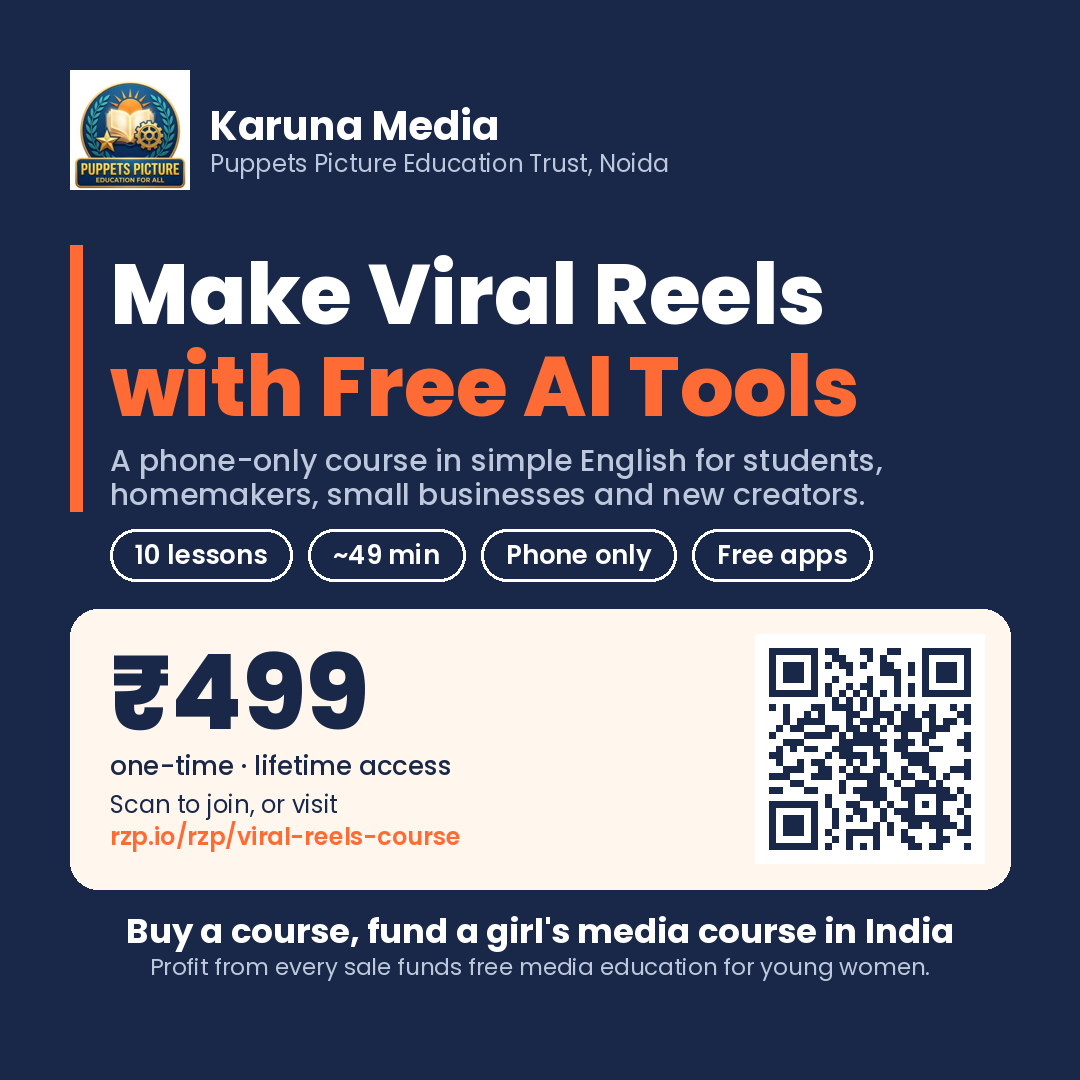
Online course · ₹499
Make viral Reels with just your phone and free AI tools
10 short lessons in simple English and Hinglish, with a 7-day refund. Profit from every sale funds a girl’s media course in Noida.
See the course
2 Comments