Picture books, magazine covers, packaging, animated explainers, editorial articles and social media campaigns all rely on illustration. If you love drawing and want to turn that passion into steady work, this guide explains how to become an illustrator in India: what the job involves, the skills and tools you need, how to build a portfolio and where illustrators find their first paid projects.
What does an illustrator do?
An illustrator creates original images that explain, decorate or tell a story. Unlike a fine artist, who usually makes work for personal expression or galleries, an illustrator normally works to a brief. A publisher, brand, agency or media house describes what they need, and the illustrator turns that brief into artwork that fits a specific format, audience and deadline.
Typical tasks include:
- Reading and clarifying a brief so you understand the message, audience, size and deadline.
- Researching references for settings, clothing, objects or technical details.
- Sketching thumbnails and rough ideas for the client to choose from.
- Developing final artwork by hand, digitally or with a mix of both.
- Revising based on feedback from an art director, editor or client.
- Delivering files in the correct resolution, colour mode and format for print or screen.
Types of illustration work
Illustration is a wide field. Knowing the main areas helps you choose where to focus first.
Editorial illustration
Images that accompany articles in newspapers, magazines and news websites. Editorial work often has tight deadlines and asks you to express an idea or opinion visually.
Children’s books and publishing
Picture books, school textbooks, story apps and book covers. Publishers look for consistent characters, clear storytelling and an appealing style.
Brand and advertising illustration
Packaging, posters, product labels, campaign artwork and brand mascots. This work usually comes through design studios and advertising agencies.
Digital and social media illustration
Instagram carousels, app screens, website banners, stickers and explainer graphics. Demand here has grown as brands and NGOs publish more visual content online.
Concept art and animation
Character design, background art and visual development for animation, games and films. This area overlaps with animation careers and often needs strong anatomy and perspective skills.
Skills you need to become an illustrator
Drawing fundamentals
Strong fundamentals matter more than any one style. Practise anatomy and gesture, perspective, light and shadow, composition and colour. Draw from life whenever you can: people at a bus stop, objects in your kitchen, buildings on your street.
A recognisable but flexible style
Clients often hire illustrators because of their style. Develop a consistent visual voice, but stay flexible enough to adapt it to different briefs and audiences.
Visual storytelling
The best illustrations communicate an idea in seconds. Practise reducing a complex topic, such as saving money or climate change, into one clear image.
Professional skills
Meeting deadlines, communicating clearly, accepting feedback, writing simple quotes and invoices, and understanding basic usage rights are all part of working as a professional illustrator.
Tools illustrators use
You can start with a pencil and sketchbook. As you move into paid work, digital tools become important because most clients expect digital files.
- Traditional media: pencils, ink pens, watercolour and gouache, which can be scanned or photographed.
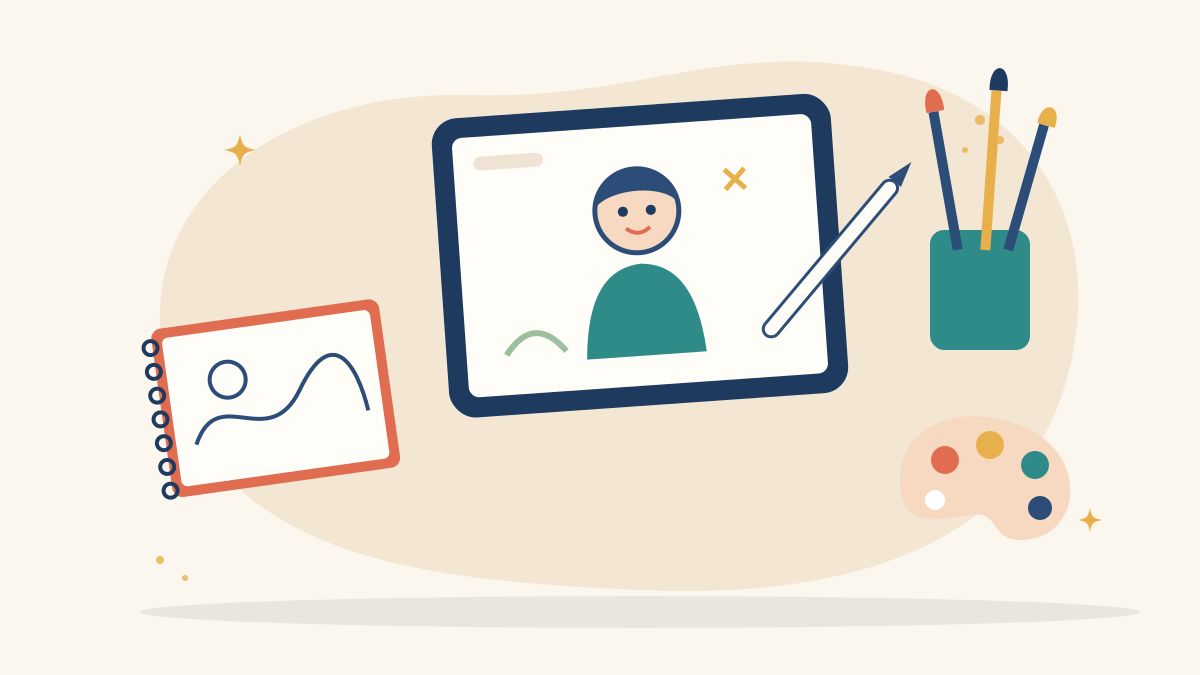
- Drawing tablets: pen tablets connected to a computer, or tablets with a stylus such as an iPad with Apple Pencil.
- Software: Adobe Photoshop and Illustrator are widely used. Procreate is popular on iPad, and Krita is a capable open-source option for beginners.
- File knowledge: learn the difference between raster and vector, RGB and CMYK, and how resolution affects print quality.
Education and training paths in India
There is no single required qualification for illustrators. Common routes include a degree or diploma in fine arts, applied arts, visual communication or animation; short practical courses in digital illustration; and disciplined self-study combined with mentorship. Clients and art directors judge illustrators mostly by their portfolio, so regular practice and finished projects carry real weight.
How to build an illustration portfolio
- Choose a direction. Decide whether you want to target publishing, editorial, brands or animation first, and include work that suits that market.
- Create self-initiated briefs. Illustrate a short folk tale, design a mascot for a local shop or create an editorial image for a recent news topic.
- Show consistency. Ten to fifteen pieces in a coherent style are more convincing than many unrelated experiments.
- Include sequences. For publishing, show the same character in several scenes to prove you can keep a design consistent.
- Show process for a few pieces. Sketches and roughs help art directors trust your thinking.
- Put it online. Use a simple portfolio website, Behance or a professional Instagram account, and keep one clear link to share.
Finding your first illustration work
Most illustrators combine several sources of work early on:
- Design studios and agencies that need illustration for brand and campaign projects.
- Publishers and education companies that commission book and textbook artwork.
- Media houses and digital publications that need editorial images.
- Animation and gaming studios, often through junior or intern roles.
- Independent projects for small businesses, NGOs and creators.
Research the companies you want to work with, send short and polite emails with a portfolio link, and follow up after a reasonable time. Join illustration communities, take part in drawing challenges and ask experienced illustrators for honest feedback.
Pricing, rights and growing your career
Rates vary widely by project type, usage, client size and experience, so research current market rates and ask peers before quoting. Always clarify how the client will use your work, for how long and in which media, because usage rights affect the fee. Over time, illustrators can grow into senior illustration roles, art direction, character design, teaching or running their own studio.
Is illustration a good career for women?
Yes. Illustration rewards imagination, craft and persistence, and much of the work can be done remotely or on flexible schedules. What many talented women lack is access to equipment, structured training and a first opportunity to work on real briefs.
Learn creative and digital skills with Karuna Media
Karuna Media, an initiative of Puppets Picture Education Trust (PPET) in Noida, runs the 12-month Karuna Media Master Program for women from underprivileged backgrounds. Learners build media, filmmaking, design and AI skills with support for job placement, so they can create portfolios that open doors to creative careers.
- Want to learn? Read about the program and apply here.
- Want to help more women enter creative careers? Support our work through the donate page.
Your next step
Start a small daily habit: one quick sketch from life every day and one finished illustration every week. Within a few months you will have the foundation of a portfolio. Consistent practice, a clear focus and real briefs are the core of how to become an illustrator, and each finished piece brings your first commission closer.
The Giving Movement by Karuna Media · #TheGivingMovement
Wear the cause: tees, a tote and a mug that fund media training for women
Tee (Black) ₹699 · Tee (White) ₹649 · Tote ₹449 · Mug ₹399. Printed on demand and shipped across India. 100% of the profit funds media training for underprivileged women.
Buy now on Razorpay Prefer to donate? Go to our donate pageMerch is a purchase, not a donation, and is not eligible for 80G. To make a donation, use our donate page.