Meta description: This narrative of Meera, a fictional composite based on real PPET student journeys, shows how media education can help a young woman from a ₹12,000-per-month household move from dropout and zero income to a salaried career in 12 months.
When Meera stopped going to school after Class 10, nobody in her village called it a crisis. They called it practical. Her father was a daily wage labourer in western Uttar Pradesh, earning around ₹12,000 in a good month and less in a bad one. Her mother stretched every rupee between rent, ration, medicines, and electricity. College was not a decision waiting to be made. It was a luxury already rejected by arithmetic.
At 17, Meera’s contribution to the household economy was invisible because it had no salary line. She cooked, cared, waited, and worried. Her income was ₹0. Her confidence was thinner than the walls of the rented room where her family lived. Like many girls around her, she began to believe that ambition was something other people inherited.
A Door She Did Not Expect to Open
A local teacher told her about Puppets Picture Education Trust (PPET), a registered trust in Noida that offers media education to underprivileged women aged 16+ from families earning below ₹20,000 per month. Meera did not know what “media education” really meant. She had only seen short videos on borrowed phones and television debates that felt far away from her life. But she knew one thing clearly: a real chance at a job changed the conversation at home.
Even then, admission was not automatic. Every year, more than 1,000 young women apply, and only around 100 are selected. For Meera, the application process felt like standing at a railway platform where one train could change everything. She filled forms carefully, answered questions honestly, and sat for interactions with equal parts fear and stubborn hope.
“We do not select the loudest confidence. We select commitment, grit, and the willingness to build a future.”
PPET Impact Reports
The 12-Month Journey That Rebuilt Her Voice
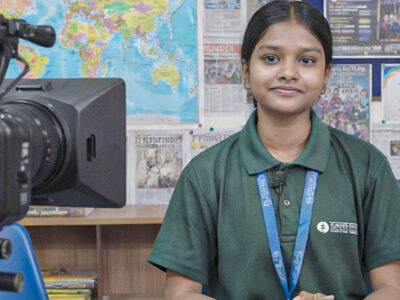
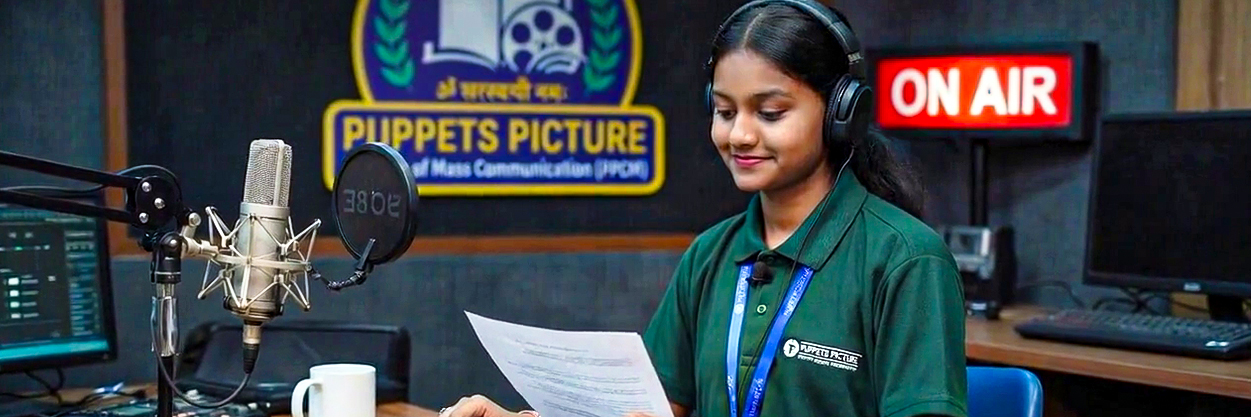
Meera entered the 12-month KMMC program with little technical exposure and a lot of hesitation. In her first week, she spoke softly in class and avoided eye contact during presentations. By month three, she was learning camera framing and basic cinematography. By month six, she was editing short-form video assignments. By month nine, she was experimenting with AI tools for scripting support, idea structuring, and post-production speed. The girl who once thought technology belonged to other people was now troubleshooting timelines and color corrections.
Training at PPET did not happen in abstraction. It was practical, portfolio-driven, and tied to real output expectations. Students learned to pitch story ideas, collaborate in teams, handle deadlines, and take critique without collapsing. They discovered that professionalism is not just technical skill; it is discipline under pressure.
- Technical growth: Video editing, shooting fundamentals, sound basics, and production workflow.
- Creative growth: Storytelling structure, visual language, and audience-first communication.
- Career growth: Portfolio development, interview readiness, and job-facing confidence.
- Digital growth: Exposure to AI-enabled media tools and modern content pipeline practices.
When Meera submitted her final portfolio project, she was no longer hiding in the back row. She had become someone who could imagine herself in a studio, a production team, or a digital media office. That shift – from self-doubt to self-belief – is difficult to quantify, but it is often the first real break in the poverty cycle.
The Job Offer That Changed the Family Equation
Near the end of her program, Meera interviewed for an entry-level media role. She was offered ₹20,000 per month. For some urban professionals, that number may sound ordinary. For Meera’s family, it was transformative. In one offer letter, the household moved from surviving month to month on a single uncertain wage to two income streams, one of them stable and skill-linked.
PPET’s 100% placement record is often stated as a headline statistic, but inside homes like Meera’s, it becomes something deeply personal. It means fewer borrowed loans from neighbors. It means medicines are bought on time. It means electricity bills are paid before disconnection threats. It means younger siblings are told, “You will continue school,” and this time the sentence is backed by money.
Meera’s younger sister, who had quietly started missing classes because of mounting costs, returned to regular schooling. Her notebooks were paid for. Her exam fees were paid for. Her future stopped shrinking.
“The first salary is not just income. It is evidence to a family that a daughter can become the strongest economic pillar in the house.”
PPET Impact Reports
Meera’s Story Is One Story – and Also Many
Meera is a fictional composite, but the pattern is real and repeated. Every year, PPET receives 1,000+ applications from young women who have talent but no access. Around 100 are selected. They train in programs such as KMMC (12-month), BJMC (3-year), and MJMC (2-year). They build work that can be seen publicly, including contributions to a growing body of 505 student-created videos associated with PPET’s 44,900+ YouTube subscriber ecosystem. They enter employment with starting salaries commonly in the ₹15,000-₹40,000 range. They go home with more than certificates; they go home with earning power.
This model has held for 11 years since 2012, supported by institutional partnerships including SVU and Glocal University. It is not an inspirational accident. It is a system built with intent: identify high-potential, low-opportunity women, remove financial barriers, deliver serious training, and ensure market entry.
What Hope Looks Like in Practical Terms
Hope is often described as a feeling. At PPET, hope looks like timetables, equipment, faculty hours, mentorship sessions, project reviews, and placement calls. It looks like structured learning that does not ask poor families to choose between food and fees. It looks like a girl from a low-income village commuting to class with purpose, not apology.
If you have ever wondered whether one contribution can truly alter a life trajectory, Meera’s journey gives you a direct answer. The distance between ₹0 and ₹20,000 is not only numeric. It is the distance between dependence and agency, silence and voice, fear and plan.
And once that distance is crossed by one daughter, an entire family begins to think differently about girls, education, and possibility.
You Can Be the Reason the Next Meera Gets Her Chance
You can be the reason the next Meera gets her chance. Support a student through the Donate Now page or message the team directly on WhatsApp. ₹5,000 sponsors one month of a student’s training. For one family, that support can become the turning point between inherited hardship and earned dignity.

Online course · ₹499
Make viral Reels with just your phone and free AI tools
10 short lessons in simple English and Hinglish, with a 7-day refund. Profit from every sale funds a girl’s media course in Noida.
See the course