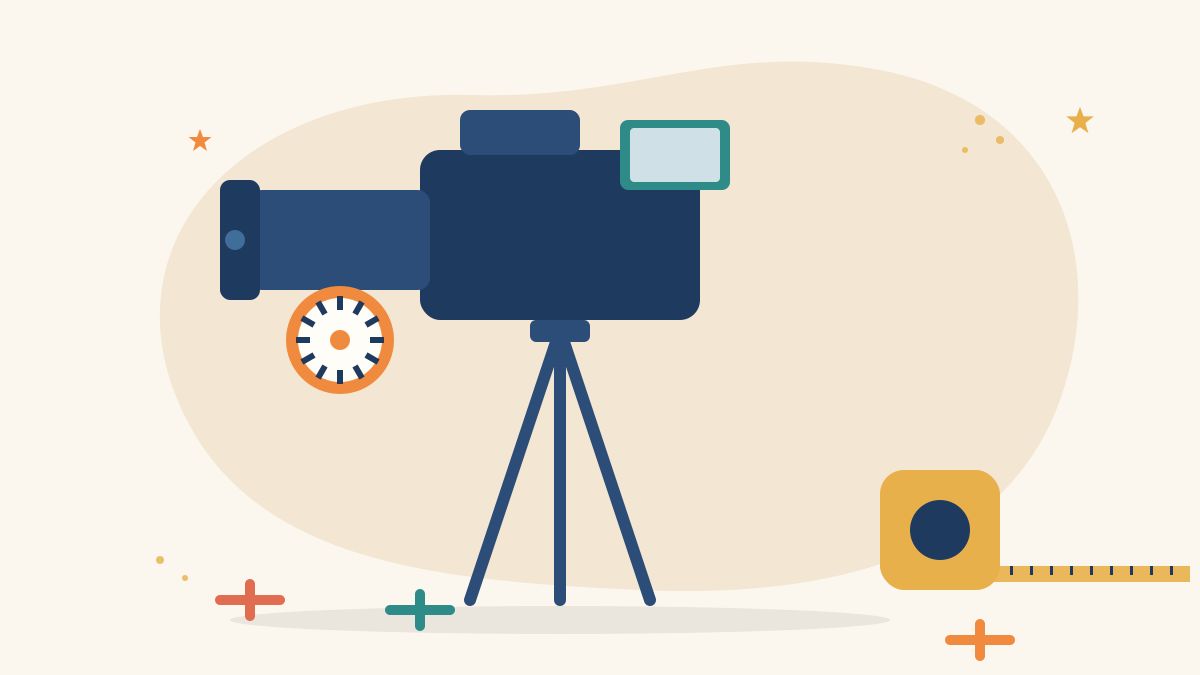
Watch any film scene where the background melts into a soft blur while an actor’s eyes stay perfectly crisp. That sharpness did not happen by accident. Someone standing beside the camera, often not even looking through it, was turning a focus wheel in time with the actor’s movements. That person is the focus puller, also called the first assistant camera or 1st AC.
This guide explains what a focus puller does, how the camera department is organised, the skills you need, an illustrative focus marks sheet and practical steps to start the career in India.
What does a focus puller do?
The focus puller’s main job is to keep the right part of every frame in sharp focus while the camera, the actors or both are moving. Much of the time the focus puller is not looking through the viewfinder at all. Instead, they rely on measured distances, marks on the lens or focus wheel, a monitor and careful anticipation of where the actor will move.
On most sets, the 1st AC also:
- Prepares and builds the camera each day, checking lenses, filters, batteries and media before the first shot.
- Changes lenses and filters as the director of photography (DoP) asks, and sets the aperture or T-stop for each shot.
- Checks technical settings such as frame rate and shutter angle, so the footage matches the plan.
- Looks after the equipment, cleaning lenses and keeping the camera safe when it is unattended.
- Coordinates the camera crew, including the second assistant and trainees.
The UK industry body ScreenSkills publishes a detailed job description for the 1st assistant camera that lists tasks such as fitting filters, making focus marks, reporting any suspicion of soft focus and troubleshooting camera faults.
How the camera department works
Director of photography
The DoP, or cinematographer, designs the look of the film with the director and leads the camera and lighting teams. Our guide on how to become a cinematographer explains this senior role.
Camera operator
On larger productions, an operator frames and moves the camera while the DoP concentrates on lighting. On smaller shoots, the DoP often operates.
First assistant camera (focus puller)
Responsible for focus and the technical readiness of the camera. On very large productions, focus pulling and other 1st AC duties are sometimes split between two people.
Second assistant camera
The 2nd AC usually marks actors’ positions, operates the clapperboard, keeps camera reports and manages batteries and media. On small crews, one assistant may do both jobs.
Camera attendants and trainees
In India, many sets also have camera attendants who help move and protect equipment. It is a common way to learn how a camera department runs.
Skills you need
- Distance judgment. Estimating whether an actor is two metres or two and a half metres away, quickly and accurately.
- Understanding depth of field. Knowing how aperture, focal length and distance change how much of the scene is sharp. Our guide on how to shoot in manual mode covers the aperture basics.
- Calm hands and timing. Focus changes must match the rhythm of the actor’s movement, not lag behind it.
- Technical knowledge. Camera bodies, lens mounts, wireless follow focus systems, monitors and power.
- Organisation. Labelled lens cases, charged batteries and a tidy cart save time on every setup.
- Communication. Working quietly with the DoP, operator, actors and the data team, and speaking up when a take was soft.
Illustrative example: a focus marks sheet
This example is illustrative. Imagine a dialogue scene where an actor walks from a doorway to a window and sits down. During rehearsal, the 1st AC measures key distances from the camera’s focal plane and records them.
- Shot: Scene 18, shot 3, 50mm lens, T2.8
- Mark A, doorway: 4.5 m, actor pauses here for her first line
- Mark B, middle of the room: 3.0 m, she turns towards the camera
- Mark C, window: 2.2 m, she stops and looks outside
- Mark D, seated at the table: 1.6 m, close shot ends here
- Notes: depth of field is shallow at this stop, so the eyes are the priority; second actor in the background stays soft by design
The 1st AC writes these marks on a small whiteboard or on tape around the focus wheel. During the take, the follow focus moves between A, B, C and D as she passes each point. If she hits Mark C late, the puller waits for her rather than following the script.
How to become a focus puller in India
- Learn camera fundamentals. Understand exposure, lenses and depth of field. Practise with any camera that allows manual focus, even a phone app with a manual focus slider.
- Practise pulling focus. Ask a friend to walk slowly towards the camera and try to keep them sharp, then review the footage on a large screen. Repeat with faster movement and longer lenses.
- Learn the equipment. Rental houses and camera workshops are good places to see professional cameras, lens sets and follow focus systems up close.
- Start as a trainee or camera attendant. Student films, advertisements and music videos often need extra hands. Show up early, label everything and ask how the 1st AC built the camera.
- Move up to 2nd AC. Slating, camera reports and data handling teach you set discipline. Learn to protect footage using a method like the one in our guide on how to back up video footage.
- Understand industry associations. In Mumbai, the Western India Cinematographers Association (WICA) lists membership categories such as apprentice, junior, associate and active, and says applications need an existing active member as proposer. Rules change, so check the current requirements directly with any association where you plan to work.
- Build relationships with DoPs. Camera assistants are usually hired by recommendation. A DoP who trusts your focus will call you again.
Tips for women entering the camera department
Camera departments in India have historically had few women, but that is changing. A few habits help anyone succeed:
- Know your kit by heart, so no one questions your competence.
- Plan for physical work with good shoes, gloves and safe lifting technique for heavy cases.
- Find mentors, including women cinematographers whose work you admire.
- Keep a log of every shoot with the camera, lenses and your role, which becomes your CV.
Common mistakes beginners make
- Watching the monitor instead of the actor. Distance changes are easier to anticipate by watching movement.
- Not measuring during rehearsal. Guessing on a shallow lens rarely works.
- Hiding a soft take. Tell the DoP immediately so the scene can be shot again.
- Leaving lenses uncapped or unattended. Equipment care is part of the job.
Learn camera and filmmaking skills with Karuna Media
Karuna Media, an initiative of Puppets Picture Education Trust (PPET) in Noida, trains women from underprivileged backgrounds in media, filmmaking and AI skills through the Karuna Media Master Program, so they can build portfolios for creative careers.
- Want to learn? Read about the program and apply here.
- Want to help more women work behind the camera? Support our work through the donate page.
Your next step
Set your camera or phone to manual focus. Ask a friend to walk from three metres to one metre while talking. Record five takes, keeping their eyes sharp. Watch them on a laptop and count how many frames were soft. That number is your first benchmark as a focus puller.
The Giving Movement by Karuna Media · #TheGivingMovement
Wear the cause: tees, a tote and a mug that fund media training for women
Tee (Black) ₹699 · Tee (White) ₹649 · Tote ₹449 · Mug ₹399. Printed on demand and shipped across India. 100% of the profit funds media training for underprivileged women.
Buy now on Razorpay Prefer to donate? Go to our donate pageMerch is a purchase, not a donation, and is not eligible for 80G. To make a donation, use our donate page.