Every film, ad and reel is built from shots. The type of shot you choose decides what the audience sees, how close they feel to a character and what they notice in a scene. Learning camera shot types is one of the first and most useful steps in filmmaking, whether you shoot on a professional camera or a phone.
This guide explains the most common camera shot types, camera angles and camera movements, with simple examples of when to use each, and a few exercises to practise them.
Why camera shot types matter
A shot is a continuous piece of footage from the moment the camera starts recording until it stops. Directors and cinematographers plan shots carefully because each type does a different job. A wide shot tells the audience where they are. A close-up shows what a character feels. Switching between them in the edit creates rhythm and keeps viewers interested. When you know the names of shots, you can also plan better, write clearer shot lists and communicate quickly with a crew.
Camera shot types by size
Shot size describes how much of the subject and the background appears in the frame.
Extreme wide shot
Shows a large area, such as a city skyline, a field or a crowded market, with people appearing very small. It is often used at the start of a scene to establish the location.
Wide shot
Shows a person from head to toe along with their surroundings. It helps the audience understand where the character is and how they move through the space.
Full shot
Frames a person’s whole body, with less background than a wide shot. It is useful for showing body language, dance or action.
Medium shot
Frames a person from around the waist up. This is the most common shot in interviews, news and dialogue scenes because it shows both expression and gesture.
Medium close-up
Frames a person from the chest up. It feels more personal than a medium shot while still showing a little of the setting.
Close-up
Fills the frame with a person’s face or an object. Close-ups show emotion, reactions and important details.
Extreme close-up
Shows a very small detail, such as eyes, hands, a ring or the tip of a pen. It adds drama and focus.
Shots based on subjects and framing
Two shot
Shows two people in the same frame, often used in conversations to show their relationship.
Over-the-shoulder shot
Filmed from behind one person’s shoulder, looking at another person. It is a classic choice for dialogue because it keeps both characters connected.
Point-of-view shot
Shows what a character is seeing, as if the camera is their eyes.
Insert shot
A close shot of an object or action, such as a phone screen, a letter or a key turning, that gives the audience important information.
Camera angles
The angle is the height and direction from which the camera looks at the subject.
- Eye level: the camera is at the subject’s eye height. It feels natural and neutral.
- High angle: the camera looks down at the subject, which can make them seem small or vulnerable.
- Low angle: the camera looks up at the subject, which can make them seem strong or important.
- Overhead or top shot: the camera looks straight down, popular for cooking videos, flat-lays and maps.
- Dutch angle: the camera is tilted to one side, creating a feeling of unease or tension.
Camera movements
Movement adds energy and guides attention.
- Pan: the camera turns left or right from a fixed point.
- Tilt: the camera tilts up or down from a fixed point.
- Dolly or tracking shot: the camera moves towards, away from or alongside the subject.
- Handheld: the camera is held by hand, giving a raw and realistic feel.
- Zoom: the lens changes focal length to make the subject appear closer or further away without moving the camera.
On a phone, you can create smooth movement with a gimbal, or simply by walking slowly with your elbows tucked in and the phone held with both hands.
How to choose the right shot
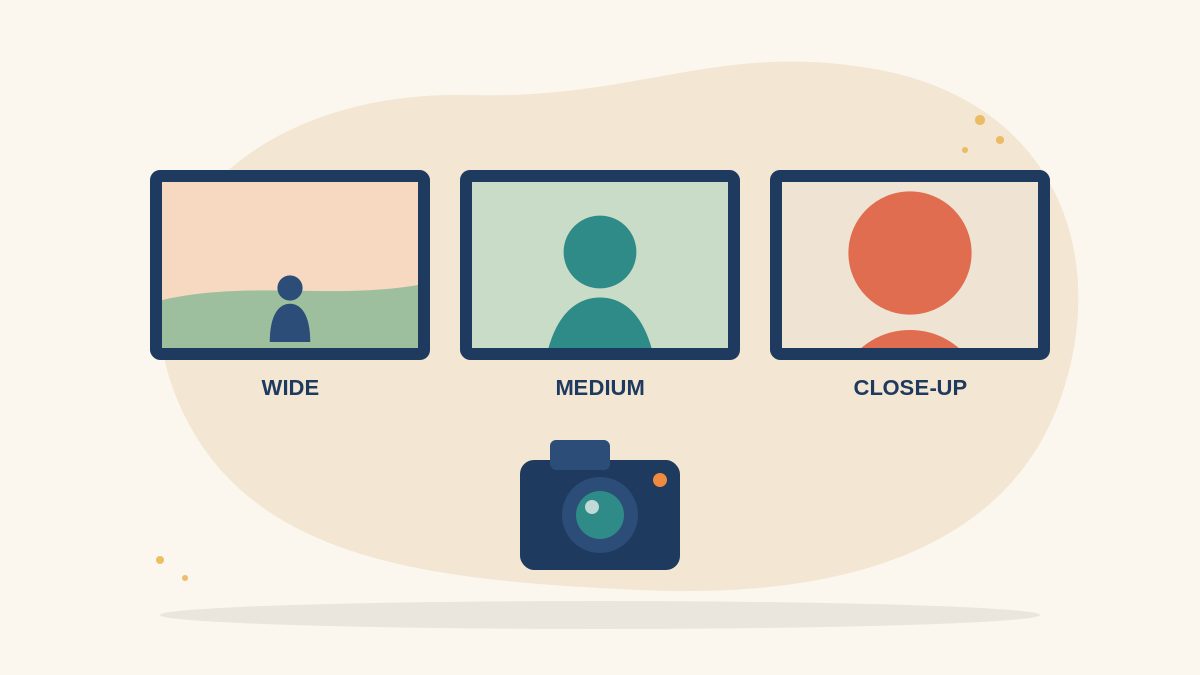
Ask yourself one question for each moment: what does the audience need to see or feel right now? If they need to understand the place, use a wide shot. If they need to feel a character’s emotion, move closer. A simple and reliable pattern for a scene is wide, then medium, then close-up, which moves the viewer gradually into the action.
Practise camera shot types: 5 simple exercises
- One subject, seven sizes. Film a friend or an object in every shot size from extreme wide to extreme close-up.
- Angle study. Record the same person speaking from eye level, a high angle and a low angle, and notice how the feeling changes.
- A one-minute conversation. Shoot a short dialogue using a two shot and over-the-shoulder shots, then edit them together.
- A process video. Film making a cup of tea using wide shots, close-ups and insert shots.
- A shot list. Before your next shoot, write a shot list naming each shot type. Our guide on how to make a storyboard shows how to plan visually.
Common mistakes beginners make
- Shooting everything as a medium shot, which makes videos feel flat.
- Cutting off heads or hands awkwardly at the edges of the frame.
- Moving the camera without a reason.
- Forgetting to shoot close-ups and inserts that make editing easier.
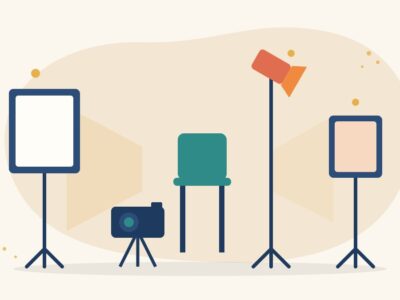
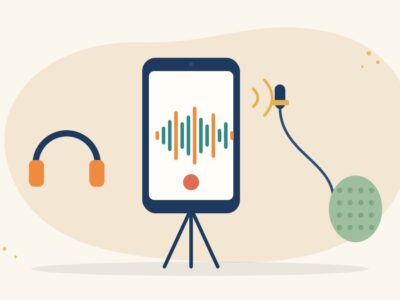
- Ignoring light and sound. Read our guides to video lighting for beginners and recording clear audio on a phone.
Next steps
Once you are comfortable with shot types, try putting them together into a short story. Our guide on how to make a short film on your phone walks you through the process, and photography composition rules will help you frame each shot better.
Learn filmmaking with Karuna Media
At Karuna Media, run by Puppets Picture Education Trust (PPET) in Noida, the 12-month Karuna Media Master Program trains women from underprivileged homes in filmmaking, cinematography, editing, audio and AI tools, with hands-on projects and job placement support. If you want to learn to tell stories with a camera, apply to the program. If you would like to help more women get there, you can support our work with a donation.
The Giving Movement by Karuna Media · #TheGivingMovement
Wear the cause: tees, a tote and a mug that fund media training for women
Tee (Black) ₹699 · Tee (White) ₹649 · Tote ₹449 · Mug ₹399. Printed on demand and shipped across India. 100% of the profit funds media training for underprivileged women.
Buy now on Razorpay Prefer to donate? Go to our donate pageMerch is a purchase, not a donation, and is not eligible for 80G. To make a donation, use our donate page.


1 Comment