A podcast is a series of audio episodes that people can subscribe to and listen to when they like: on a commute, while cooking or at the end of a long day. With a clear idea, a quiet room and a simple recording setup, you can publish a show from a home in any Indian city. This beginner’s guide explains how to start a podcast, from choosing a format to publishing on a regular cadence.
Decide why you want to start a podcast
Before you buy a microphone, write down the reason for the show. A podcast that tries to please everyone usually pleases no one. Ask who it is for, what a listener should leave with after each episode, and how much time you can honestly give each week for research, recording, editing and publishing. A clear purpose will help you name the show, choose guests and decide what does not belong.
Pick a format and a niche
Common formats
- Solo: you speak directly to the listener. This is simple to produce and suits teaching.
- Conversation: two or more hosts talk together. You need chemistry and a shared plan.
- Interview: you invite a guest and ask questions, which gives listeners a reason to try a new episode.
- Narrative or documentary: you tell a crafted story with scenes and narration. It takes more editing time, so start small if you are new.
Choose a niche you can sustain
A niche is the specific corner you will cover, such as beginner filmmaking in India, careers after a media course or stories of women starting creative work. The tighter the niche, the easier it is for the right listener to find you. Pick a subject you can still talk about after twenty episodes, not only after two.
Name the show and describe it clearly
A good podcast name is easy to say, easy to spell and easy to search. Avoid a private joke that only you understand. Write a short description of one or two sentences that states who the show is for and what it covers. Create simple artwork as well: a square image with the show name in readable type, uncluttered enough to work as a phone thumbnail.
Plan your first episodes
Outline the first few episodes so you are not inventing the show while the microphone is on.
- Write a one-line promise for the series, such as “practical audio tips for first-time podcasters in India”.
- List eight to ten episode ideas you could actually research and record.
- Outline each episode with an opening, two or three segments and a closing.
- Decide an episode length you can finish, often 15 to 30 minutes when you are starting out.
- Draft questions if you are interviewing someone, and send them a short brief in advance.
An outline keeps you from rambling without making the episode sound scripted.
Choose basic recording gear
You can start with what you already have and upgrade later.
- A USB microphone is the simplest step up from a phone. Plug it into a laptop and record directly.
- Your phone can work for early episodes if you record in a quiet room, keep the microphone close and use a stand.
- Headphones help you hear hiss, echo and interruptions while you record.
- A pop filter or foam cover reduces hard “p” and “b” sounds.
A clean recording in a quiet space will serve listeners better than expensive gear in a noisy room.
Find a quiet place to record
Echo and background noise make a new podcast hard to hear. Choose a room with soft furnishings: curtains, a sofa, a carpet or even hanging clothes. Avoid kitchens and empty halls, which bounce sound. Turn off fans if you can, close windows on a busy road and tell people in the house when you are recording. If you interview a guest remotely, both of you should do the same.
Record and edit your episode
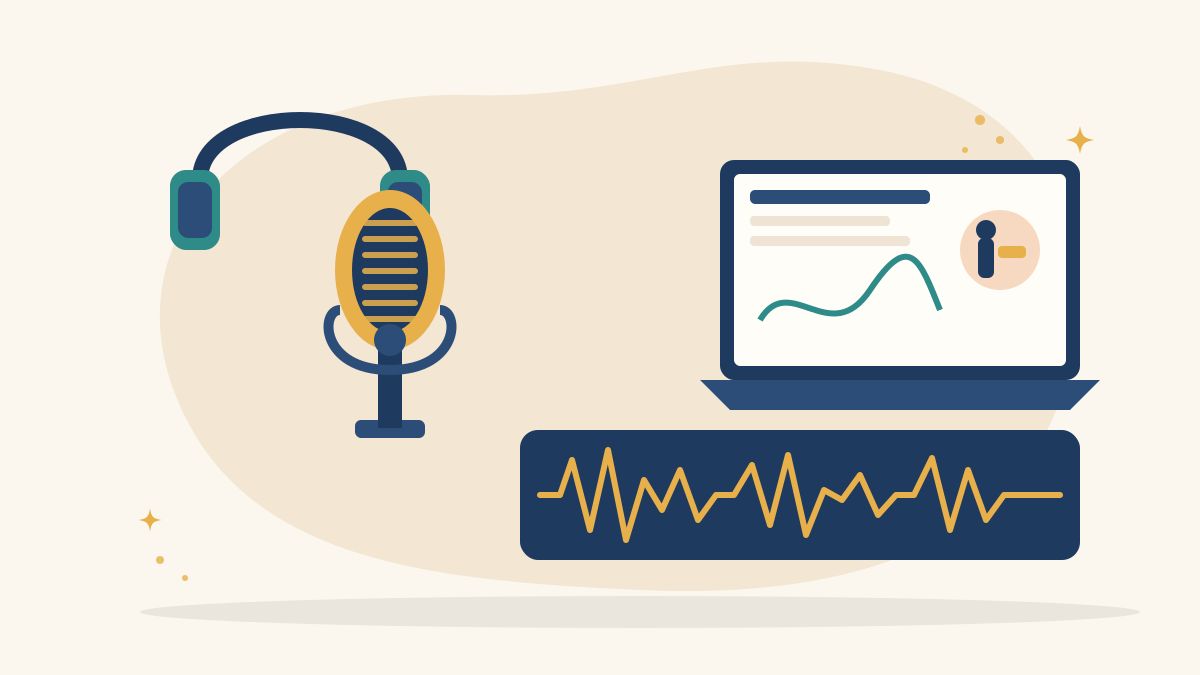
Open a digital audio editor and record in a common format such as WAV for editing. Audacity is a popular free audio editor for beginners; many people later move to other tools as their shows grow. Wear headphones, do a short test recording and play it back before you start the real episode.
While recording:
- Sit close enough to the microphone that your voice is clear, but not so close that every breath pops.
- Pause instead of saying “um” to fill every gap; pauses are easy to shorten later.
- If you make a mistake, stop, leave a second of silence and say the sentence again.
Editing is where the episode becomes listenable. Remove long silences, repeated sentences and distracting noises. Balance the volume so voices sit at a steady level, add a short intro and outro if you have one, and export an MP3 that sounds clean on phone speakers.
Host the show and publish an RSS feed
A podcast host stores your audio files and gives you an RSS feed, which is the link that apps such as Apple Podcasts, Spotify and others use to find new episodes. At a high level, the steps are:
- Choose a hosting service and create a show page with your title, description and artwork.
- Upload your episode audio and write the title and show notes.
- Publish the episode and copy your RSS feed.
- Submit that feed to the listening apps you want to appear in.
Some hosts offer a free starter tier that is enough for a new show. Compare storage limits, whether your feed is easy to move later and how the host handles analytics. You do not need to be on every app on day one; start with the main directories and add more as you settle into a rhythm.
Write show notes and pick a publishing cadence
Show notes are the text that accompanies each episode. They help listeners decide whether to play it and help search engines understand the topic. Include a short summary, the names of any guests, useful links and timestamps for longer episodes.
A publishing cadence is simply how often you release episodes: weekly, fortnightly or monthly. Choose a pace you can keep for several months. A reliable fortnightly show is more useful than a daily show that disappears after three weeks. Batch-recording two episodes on one day can make a calmer schedule easier to keep.
Learn creative and digital skills with Karuna Media
Karuna Media, an initiative of Puppets Picture Education Trust (PPET) in Noida, runs the 12-month Karuna Media Master Program for women from underprivileged backgrounds. Learners build media, filmmaking and AI skills with support for job placement, so they can create portfolios that open doors to creative careers.
- Want to learn? Read about the program and apply here.
- Want to help more women enter creative careers? Support our work through the donate page.
Your next step
Write a one-sentence promise for your show and outline three episode ideas this week. Record a short test in the quietest room you have, listen back with headphones and notice what you would change. How to start a podcast is less about waiting for perfect gear and more about finishing one clear episode, then another, until listeners know when to come back.
The Giving Movement by Karuna Media · #TheGivingMovement
Wear the cause: tees, a tote and a mug that fund media training for women
Tee (Black) ₹699 · Tee (White) ₹649 · Tote ₹449 · Mug ₹399. Printed on demand and shipped across India. 100% of the profit funds media training for underprivileged women.
Buy now on Razorpay Prefer to donate? Go to our donate pageMerch is a purchase, not a donation, and is not eligible for 80G. To make a donation, use our donate page.