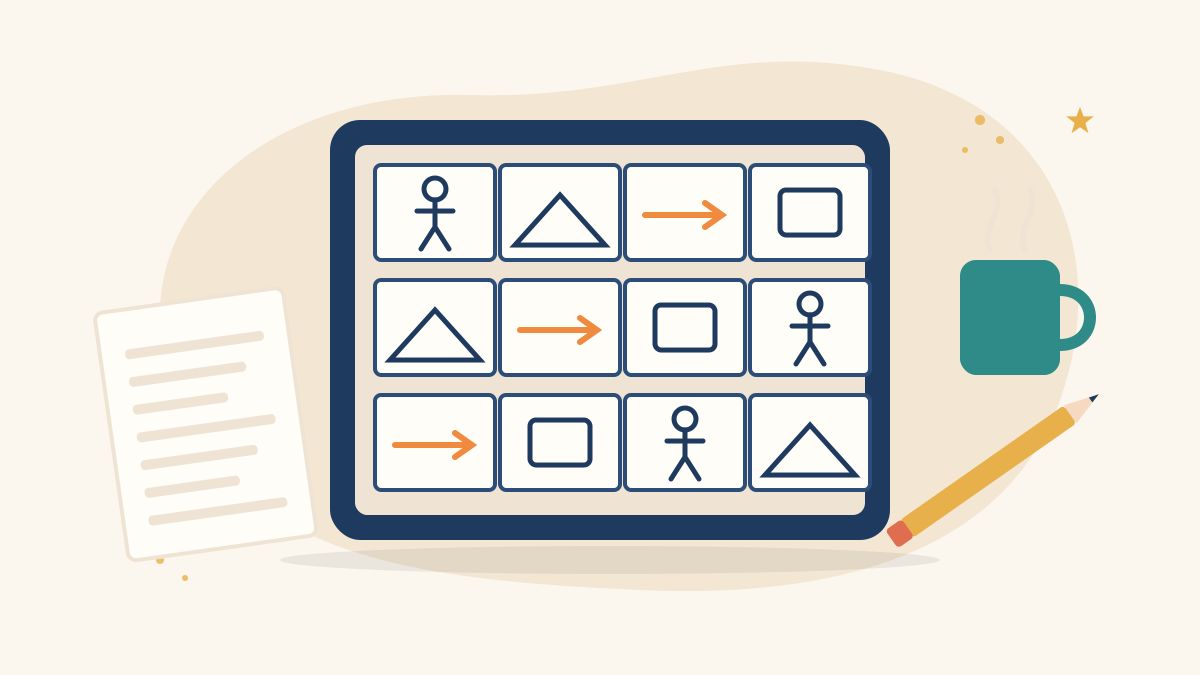
Before a camera rolls on an advertisement, an animated series or a film action scene, someone has often drawn it first, frame by frame. That person is a storyboard artist. Their drawings let a director, producer and crew agree on what each shot looks like before anyone spends money on a set, a location or an animation team.
If you like drawing and you love films, this guide explains what storyboard artists do, where they work, the skills that matter most, how to build a portfolio and an illustrative portfolio test you can try this week.
What does a storyboard artist do?
A storyboard artist turns a script, a director’s notes or an advertising brief into a sequence of drawings called panels. Each panel shows one shot or one key moment: what is in the frame, where characters stand, how the camera moves and what happens next.
The UK government’s apprenticeship standard for a storyboard artist (Skills England) describes the core purpose well: to visualise the narrative, plan shots, draw panels showing staging and action, and maintain continuity between scenes. It also notes that boards may be rough drawings or cleaned-up, more defined drawings, created on paper or digitally.
Day to day, the work usually involves:
- Reading the script or brief and breaking it into shots.
- Discussing shot ideas with the director, and sometimes the cinematographer or animation lead.
- Drawing panels quickly, often as rough thumbnails first.
- Adding arrows for camera and character movement, plus notes on dialogue, sound and timing.
- Revising panels, sometimes many times, after feedback.
- In animation, helping create an animatic: storyboard panels timed in an editing program with scratch dialogue and sound.
Storyboard artist versus making your own storyboard
Many filmmakers draw simple storyboards for their own projects using stick figures, and that is a useful planning skill. Our guide on how to make a storyboard covers that process. A professional storyboard artist goes further: the drawings must be clear enough for a whole team, fast enough to keep up with a production schedule and consistent in style across hundreds of panels.
Where storyboard artists work
- Advertising agencies and production houses: boards for television and online commercials, often needed quickly for client approval.
- Animation studios: boards for series, films and explainer videos, plus animatics.
- Film and web series: boards for action, stunts, visual effects and complex sequences.
- Games and interactive media: cinematic sequences and trailers.
- Independent work: many storyboard artists work project by project for several clients.
Storyboarding connects closely with illustration and animation. If you are deciding between them, read our guides on how to become an illustrator in India and how to become an animator in India.
Skills that matter most
Drawing for clarity, not decoration
You need to draw people, places and objects from different angles, in perspective and in motion. But storyboard drawings are working tools. A clear, quick sketch that shows the action is more useful than a beautiful drawing that takes hours.
Film language
Storyboard artists think like directors and editors. Learn shot sizes, camera angles, screen direction, the 180-degree rule and how cuts join shots together. Watch films with the sound off and sketch what you see, shot by shot.
Speed and revision
Directors change their minds. Clients ask for new versions. Being able to revise panels quickly, without losing quality or getting discouraged, is part of the job.
Communication
You will often pitch your boards in a meeting, explaining what happens in each panel. Clear speaking and listening to feedback matter as much as drawing.
Tools
Pencil and paper still work. Many artists now draw digitally with a tablet in illustration or storyboarding software, and some cut animatics in an editing program. Learn one drawing tool well before trying several.
How to build a storyboard portfolio
A portfolio matters more than a certificate in this field. Aim for a small number of complete, varied sequences rather than many single drawings.
- A dialogue scene: two people talking, showing you understand coverage, eyelines and screen direction.
- An action sequence: a chase, a fall or a fight, showing movement and clear camera direction.
- An advertisement board: a 30-second commercial for a real or imagined product, with a clear product reveal.
- An animation sequence: expressive characters and timing, ideally with a short animatic.
- Your life drawing or sketchbook pages: showing you can draw people and places from observation.
Present boards as they would appear in a real production: numbered panels, short action descriptions, dialogue lines and arrows. Host them on a simple website so you can share one link; our guide on how to build a portfolio website walks you through it.
Illustrative portfolio test: board a 30-second advert
This exercise is illustrative. It mirrors the kind of quick test some studios and agencies set, but it is not taken from any real company.
Brief: a 30-second online advert for a neighbourhood tea stall that has started home delivery. Tone: warm and funny. Must end on the stall’s name and phone number.
Board it in 8 to 12 panels. A possible structure:
- Wide shot: a rainy evening; an office worker looks out of a window, tired.
- Close-up: an empty cup on her desk.
- Medium shot: she picks up her phone and smiles.
- Cut to the stall: the owner pours tea; steam rises. Arrow shows a slow push-in.
- Tracking shot: a delivery rider with an umbrella weaves through a lane.
- Close-up: the doorbell is pressed.
- Two-shot: she opens the door; the rider hands over the tea.
- Close-up: the first sip; her shoulders relax.
- End card: stall name, phone number and delivery hours.
For each panel, add one line of action, any dialogue or sound note and the approximate time. Then time the whole board. If it runs longer than 30 seconds, cut a panel rather than squeezing everything in.
Getting your first work
- Start with student and independent films. Directors of short films often need boards and will credit you.
- Offer advertising-style boards to small production houses with a short, polite message and your portfolio link.
- Join animation and illustration communities online and offline, and share work in progress.
- Keep a sketchbook every day. Observation drawing builds speed for real deadlines.
Common mistakes to avoid
- Over-rendering. Shading every panel slows you down; clarity comes first.
- Ignoring screen direction. Characters who flip sides between panels confuse the crew.
- Missing camera notes. A panel without movement arrows or shot size leaves the team guessing.
- Only drawing what you like. Studios need artists who can adapt to the project’s style.
Learn visual storytelling with Karuna Media
Karuna Media, an initiative of Puppets Picture Education Trust (PPET) in Noida, trains women from underprivileged backgrounds in media, filmmaking and AI skills through the Karuna Media Master Program, so they can build portfolios for creative careers.
- Want to learn? Read about the program and apply here.
- Want to help more women tell their stories? Support our work through the donate page.
Your next step
Pick a one-minute scene from a film you love. Watch it with the sound off and draw every shot as a small thumbnail with one line of notes. Compare your board with the scene. Where you missed a cut or a camera move, you have found what to practise next.
The Giving Movement by Karuna Media · #TheGivingMovement
Wear the cause: tees, a tote and a mug that fund media training for women
Tee (Black) ₹699 · Tee (White) ₹649 · Tote ₹449 · Mug ₹399. Printed on demand and shipped across India. 100% of the profit funds media training for underprivileged women.
Buy now on Razorpay Prefer to donate? Go to our donate pageMerch is a purchase, not a donation, and is not eligible for 80G. To make a donation, use our donate page.